📄 仓库 README
在 GitHub 查看 ↗
Stop paying your agent to re-read your codebase.
Repowise indexes your code, git history, tests and decisions once, on your machine.
Your coding agent asks the index instead of grepping and opening files, so it does about half the work.
You get the same answers in a dashboard: what calls this, what breaks, what to fix first, and why.


| Half the tool calls your agent opens 3 files where it opened 7 · 31.6% less output |
Up to 99% less noise from test runs, installs and git output · every error line kept |
88% of the right files found in one call · next best tool: 61% |
Graph, risk, health, tests and dead code make zero LLM calls · no API key to index · 28 languages · Claude Code, Codex, Cursor and any MCP host · free and open source




Quickstart · For your agent · What it does · Hosted · Benchmarks · Teams · Docs
Set it up in one line
Open Claude Code, Codex, Cursor or any MCP-capable agent in your repository and paste:
Read https://docs.repowise.dev/setup.md and set up Repowise in this repository.
The agent installs Repowise, indexes the repo with no API key, connects itself to the index, and asks you before anything costs money. To do it by hand:
uv tool install repowise          # or: pipx install repowise / pip install repowise
cd /path/to/your/repo
repowise init --yes --no-prose    # graph, git, health, dead code, docs. No key, no spend.
                                  # (add model-written docs any time with: repowise generate)
repowise serve                    # dashboard + MCP server (needs Node 20+; first run downloads the UI)
Restart Claude Code or run /mcp, then ask "What breaks if I change
src/auth.py?" or "Use Repowise get_overview to summarize this repository."
init wires Claude Code for this repo and points the global repowise MCP entry
here. Full setup for every agent →
Your agent stops guessing
Without an index, an agent rediscovers your codebase on every task: grep, open a file, open three more, grep again. Repowise answers those questions ahead of time, so the agent asks once and gets on with the work.
In a measured run on django/django, an agent with Repowise made 3.8 tool calls
instead of 7.2, opened 3.0 files instead of 7.2 and wrote 31.6% less, with
answers just as good. That is the largest saving of the five context tools we
tested. On a small local model the output cut reaches 47.9%.
How it was measured →
- Your agent gets ten task-shaped MCP tools. Ask about several files at once and get callers, risk, tests, owners and the reasons behind the code in one answer. The tool list ↓
- Up to 99% less command noise.
repowise distilltrims test, install and git output before the agent reads it and keeps every error line. Distill → - Context before the agent asks. Optional hooks warn it
off fragile files and stale paths, and Repowise keeps your
CLAUDE.mdandAGENTS.mdcurrent from the index. - See your own savings.
repowise savedand the dashboard's Usage and savings page count the tokens your agent no longer has to read.
What it does
One index of your code, its history and its decisions, used three ways: to understand the code, to change it safely, and to keep improving it.
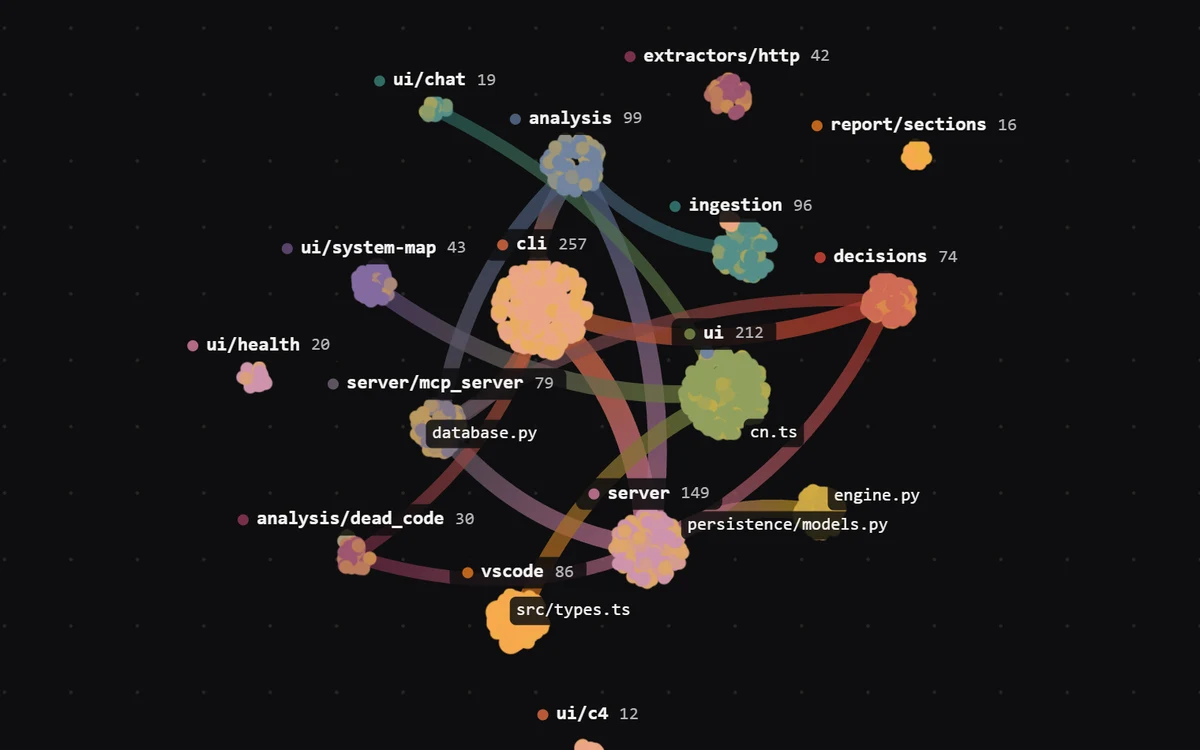
See how it fits togetherA call graph across 28 languages, an architecture map you can explore, C4 views, and a generated wiki for every module and file.The graph · Docs |
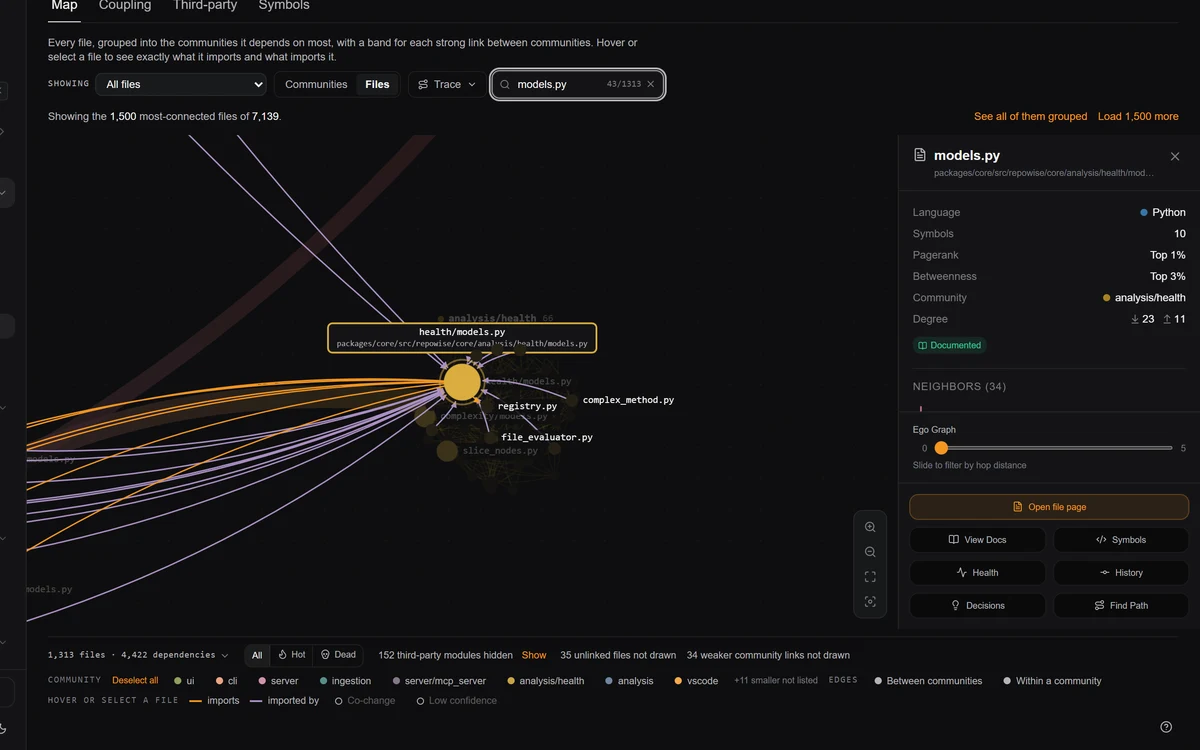
Know what breaksEvery caller of what you changed, the files that usually change with it but are missing from your diff, and the tests that reach it.Change risk · Tests |
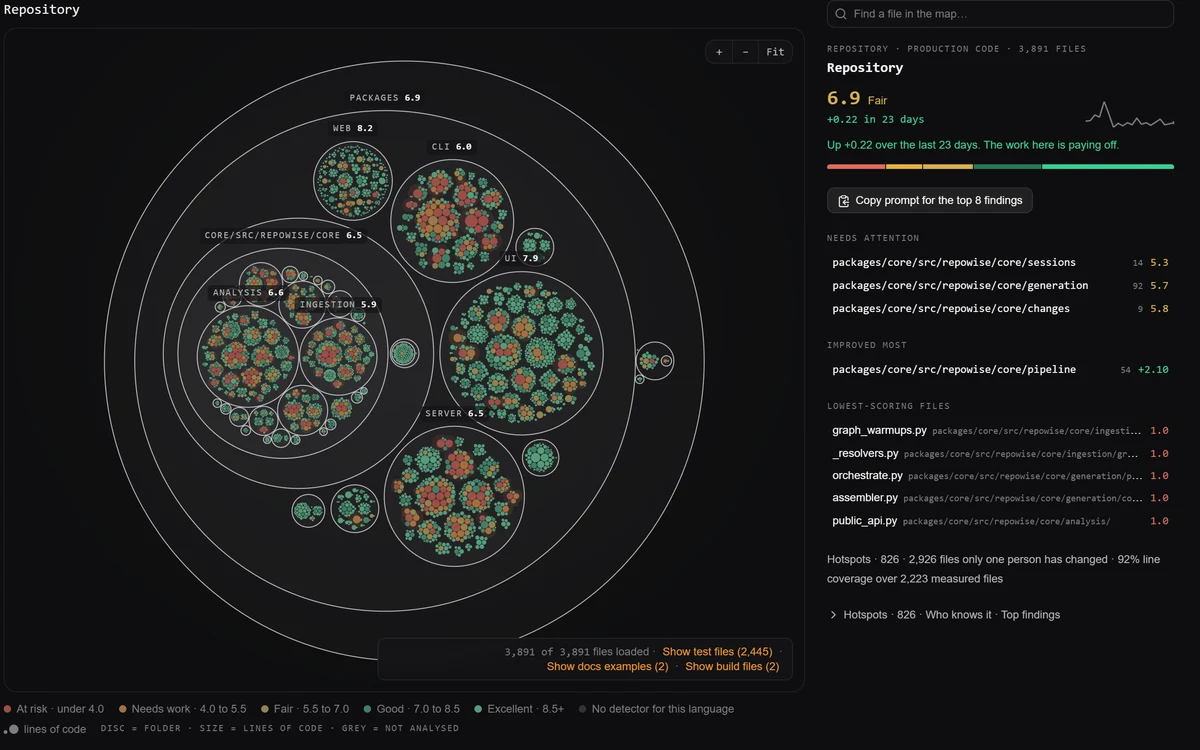
Fix what mattersA 1 to 10 health score for every file, validated against real bug history, a ranked fix-first queue, refactoring plans and dead code.Code health · Refactoring |
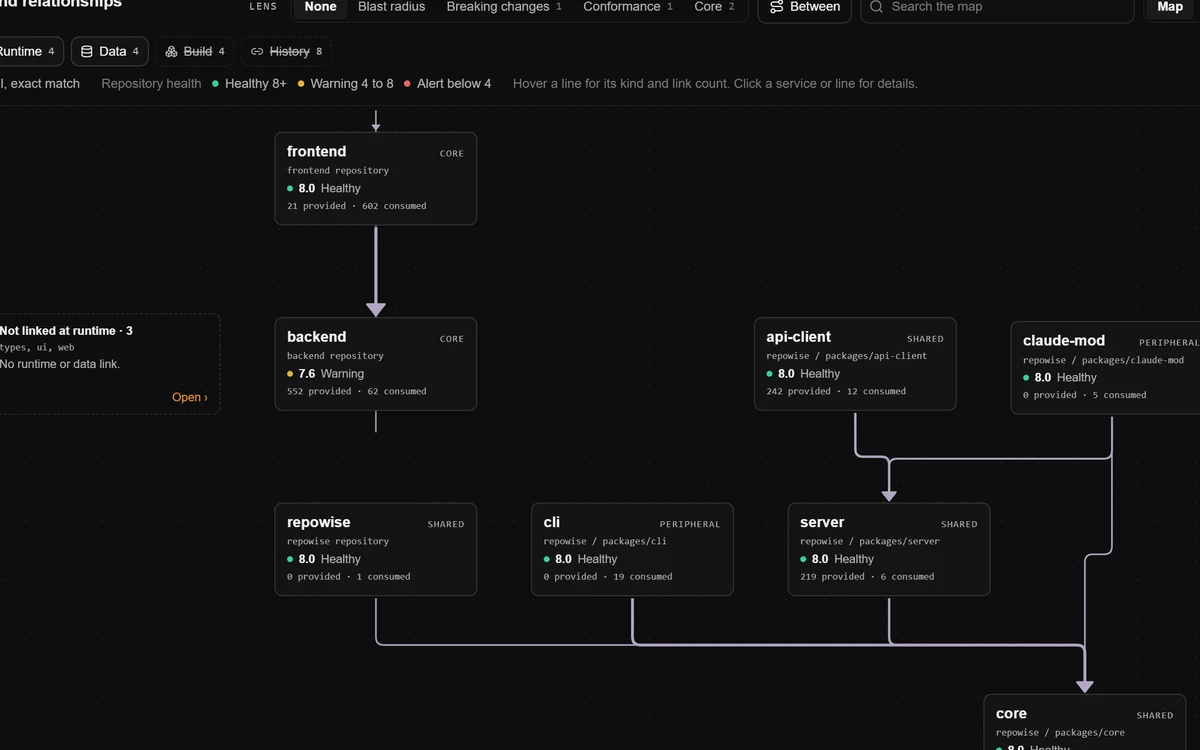
Follow it across reposServices and the HTTP, gRPC and event contracts between them, with a guard for breaking changes and the consumer files they affect.Workspaces |
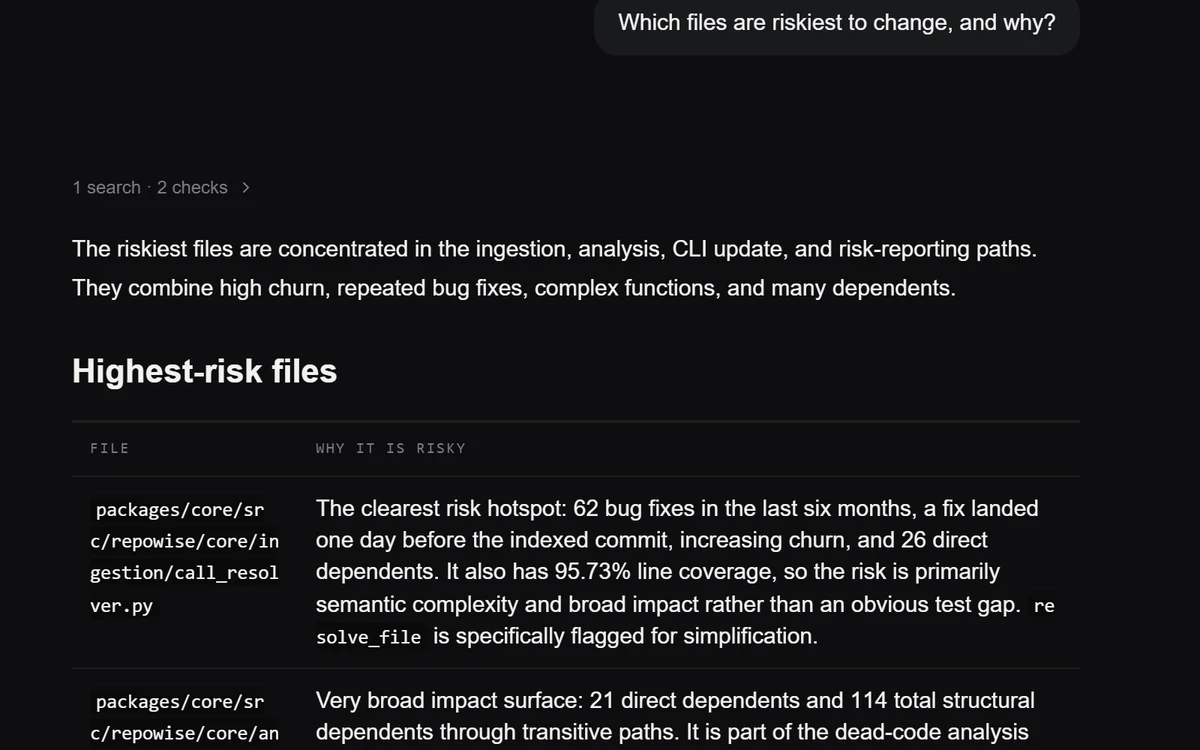
Ask it anythingCited answers and charts from the dashboard, or the same answers through MCP for your agent.Dashboard · MCP tools |
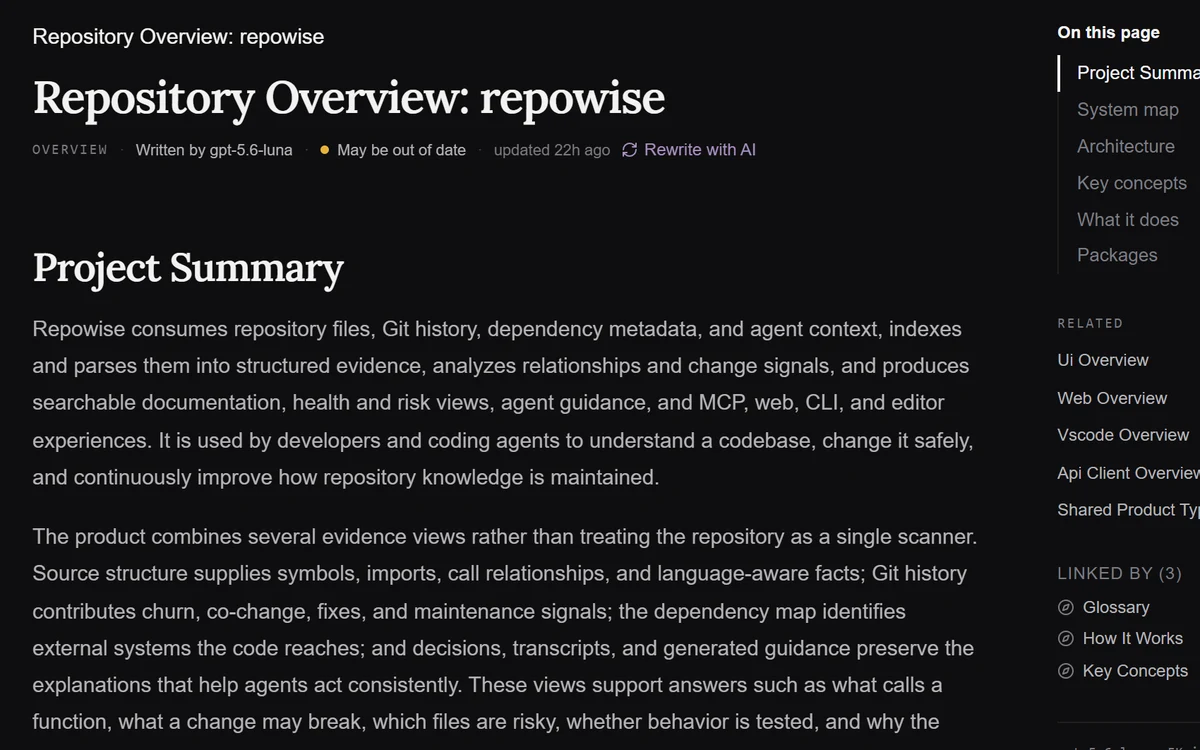
Remember whyDecisions mined from ADRs, comments, commits, PRs and agent sessions, each tied to the code it governs, plus docs checked against the code.Decisions · Doc drift |
Every question it answers
### Understand the code | You ask | Repowise gives y📈 近 7 天 Star 趋势
🏆 排名变化趋势
📋 历史上榜记录
| 日期 | 榜单 | 排名 | 周期新增 | 总 STAR |
|---|