📄 仓库 README
在 GitHub 查看 ↗ ## OpenSpace: The Skill Management Layer for AI Agents
**Your Skills Keep Growing. OpenSpace Helps You Retrieve, Evaluate, and Evolve with Every Run**
[](https://modelcontextprotocol.io/)
[](https://www.python.org/)
[](https://opensource.org/licenses/MIT/)
[](./COMMUNICATION.md)
[](./COMMUNICATION.md)
[](./README_zh.md)
[](https://github.com/HKUDS/OpenSpace/blob/v1/README.md)
**One Skill Management Layer to Power Them All** — Claude Code, Codex, OpenClaw, Hermès, nanobot.

Why OpenSpace?
As your agent’s skill grows, can your agents: - 🔍 Find the right skill at the right time? - ✅ Know which skills actually work in real-world tasks? - 🧠 Learn from failures instead of repeating the same mistakes? - 🤝 Share successful workflows across agents and team members? - 📚 Turn every completed task into reusable knowledge for the future?
OpenSpace manages the full lifecycle of your agent skills: - 🔍 Retrieve — Find the right skill for every task. - ✅ Evaluate — Know what works through real outcomes. - 🤝 Share — Turn successful workflows into team knowledge. - 🔄 Evolve — Improve skills with every run.
The right skill for every task. Proven by real outcomes. Improved with every run.
 |
 |
 |
|
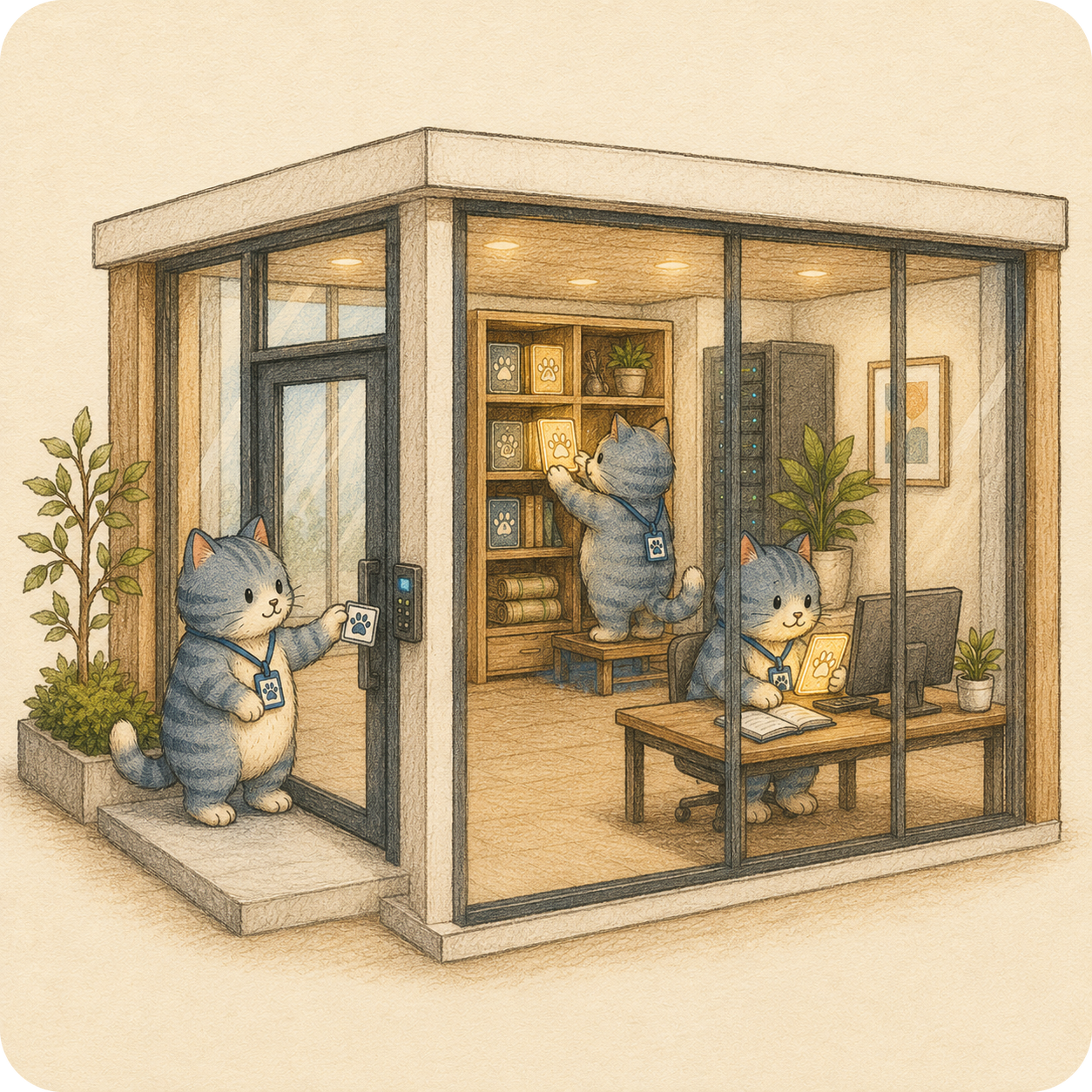
🌐 One Skill Library Across All Your Agents Your agents can retrieve, import, and reuse skills from one shared library—without rebuilding the same capabilities for every tool. |
🔒 Your Skills, Your Data, Your Infrastructure Deploy OpenSpace privately and keep your workflows, data, and reusable skill assets fully under your own control. |
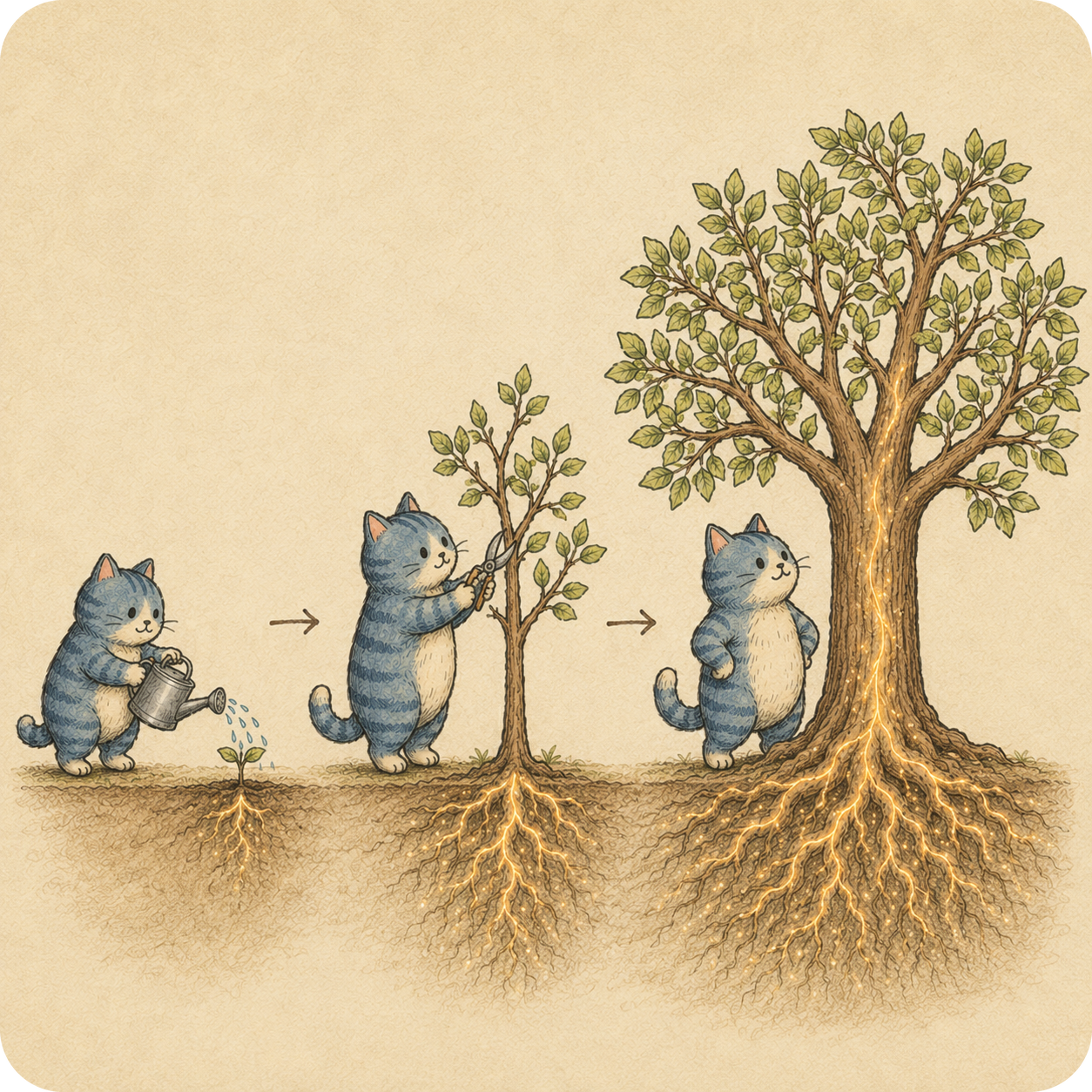
📈 Self-Evolving Skills, Proven by Real Outcomes Use real task outcomes to keep what works, improve what falls short, and confidently retire what no longer delivers value. |
One place to retrieve, evaluate, share, and evolve skills across all your agents.
📢 News
- 2026-07-17 🚀 OpenSpace v2 is released: Introducing the Skill Management Layer for AI Agents, with package-based browsing, quality summaries, task-trace uploads, and a refreshed dashboard and TUI.
Earlier news
- **2026-07-04** 📊 **Skill quality summaries now visible while browsing v2 skills**: package and skill detail views show usage-quality summaries; public lineage pages display redacted placeholders for unavailable content. - **2026-07-03** 🔎 **Package skill search and task-trace uploads are now first-class v2 flows**: package pages search skills directly, and task traces can be validated, stored, and uploaded idempotently as quality evidence. - **2026-06-25** 🌐 **The v2 cloud path became more stable for public browsing and private skill access**: public pages, private skill endpoints, frontend / backend routes, and TLS access are now checked together. - **2026-06-19** 🌐 **Public v2 pages can be read without login**: anonymous visitors can browse public skills, existing users gained an agent bootstrap path, and search / recall services were restored. - **2026-06-18** 🧭 **The v2 cloud experience became more complete**: package, group, profile, and agent pages were assembled into a cleaner package-browser flow with a more structured import path. - **2026-06-03** 🪟 **Windows communication gateway startup became more reliable**: process liveness checks received a follow-up fix for users running message adapters on Windows. - **2026-06-02** 🚀 **Release v2 introduced the new local experience**: the branch added the v2 README, dashboard, TUI, runtime services, sandboxing, memory, scheduler, skill evidence, evolution, triggers, and related assets. - **2026-05-27** 🪟 **Communication gateway Windows compatibility improved**: gateway runtime PID checks switched to Windows API handling on Windows while keeping the Unix fallback, fixing gateway startup failures on Windows. - **2026-05-14** 🧭 **Skill libraries, group detail, and lineage history expanded**: users gained owned-skill library pages, shared-skill views inside groups, and retained lineage history for inactive relationships. - **2026-05-13** 📈 **Package and skill detail pages became safer to inspect**: private data stays hidden when access is unavailable, and task-step records make skill/package views more useful for quality analysis. - **2026-05-13** ⏱️ **Long shell work became more reliable**: timeouts now clean up subprocess trees, post-task analysis is bounded, and skill-search cache writes are safer. - **2026-05-10** 📦 **V1 skills can map into v2 identity records**: package skill search respects lineage visibility, and individual skill bundles can be pulled directly. - **2026-05-09** 👥 **V2 group sharing shipped**: group-scoped skill sharing became available while v1 and v2 sharing paths stay separated. - **2026-05-01** 🏗️ **Legacy skill collections became easier to move into the v2 hierarchy**: package migration and synthesis tooling added deterministic sampling, safer agent loops, and resume checks. - **2026-04-29** 📡 **Search and package pull started producing quality records**: v2 added telemetry-backed search, package pull, skill-use sessions, and evolution telemetry for later quality summaries. - **2026-04-22** 🛡️ **Upload, share, and promote flows became safer to retry**: duplicate and replay handling was hardened so repeated requests behave predictably. - **2026-04-20** 🔎 **V2 search gained lexical recall and semantic reranking**: package and skill discovery improved beyond exact text matching. - **2026-04-18** 🛡️ **Sharing and promote-to-public became more predictable**: group / public visibility changes gained idempotent behavior and safer access checks. - **2026-04-18** ⚡ **Local skill search became much faster after warm-up**: `search_skills` now reuses the SkillRanker embedding cache and refreshes embeddings when skill text changes. - **2026-04-17** 🔄 **Shared package indexes became more reliable after uploads and sharing changes**: background rebuild and recovery paths now keep package search data in sync. - **2026-04-16** 🧬 **Evolution candidate status became trackable**: OpenSpace can record candidate processing state, and macOS window / screenshot features no longer get disabled just because `atomacos` is unavailable. - **2026-04-10** 🧩 **CAPTURED skill placement was corrected**: CAPTURED skills now write back to the correct host-agent skill directory. - **2026-04-09** 💬 **WhatsApp and Feishu adapters shipped**: OpenSpace added session management, attachment caching, allowlists, and private-safe cloud upload compatibility for external message workflows. - **2026-04-07** 🌐 OpenSpace MCP now supports standalone **SSE** and **streamable HTTP** startup, making it easier for remote hosts to connect over HTTP instead of stdio and bypass stdio-bound MCP server timeout bottlenecks. See the [host integration guide](https://github.com/HKUDS/OpenSpace/blob/HEAD/openspace/host_skills/README.md) for setup details. - **2026-04-06** 🛠️ Fixed multiple runtime issues across grounding, MCP serving, skill evolution, and persistence, improving execution stability and recovery in long-running workflows. - **2026-04-05** 🧭 Cleaned up LLM credential resolution: centralized `.env` loading, improved host config auto-detection, and made provider-native env handling more consistent. - **2026-04-03** 🚀 Released **v0.1.0** — Skill quality monitoring: structural patterns extracted from high-quality skills now evaluate every new submission daily. Faster, more relevant cloud search. Production-grade vertical skill clusters emerging organically from the community. Frontend now supports Chinese (zh) i18n. - **2026-04-02** ⚡ Cloud search upgraded for higher relevance and lower latency. - **2026-03-31** 🛡️ Security hardening: hardened zip extraction and `import_skill` against path traversal. CLI now respects `OPENSPACE_MODEL` and `OPENSPACE_LLM_*` env vars; MiniMax compatibility; workflow ID collision fixes. - **2026-03-29** 🔒 Pinned litellm to <1.82.7 to avoid PYSEC-2026-2 supply-chain attack. - **2026-03-28** 🔧 Idempotent skill registration — `register_skill_dir` now returns existing `SkillMeta` for already-registered skills. Updated OpenClaw setup docs. - **2026-03-27** 🪟 Fixed stdio deadlock on Windows; improved evolver confirmation parsing with stem-style keyword matching. - **2026-03-26** 🌱 Dynamic skill directory re-scanning on each call, lightweight local skill search, and streamlined documentation. - **2026-03-25** 🎉 OpenSpace is now open source!The Skill Management Problem
When an AI agent performs poorly, the problem is not always the model. Sometimes, it simply fails to: - 🔍 Retrieve the right skill - 🧩 Apply it to the right task - ✅ Choose the version that actually works
This problem becomes more serious as your skill library grows. With **hundreds or thousands of skills
📈 近 7 天 Star 趋势
🏆 排名变化趋势
📋 历史上榜记录
| 日期 | 榜单 | 排名 | 周期新增 | 总 STAR |
|---|